Showing posts with label Iran civilian nuclear program. Show all posts

Mar 25, 2012

The IAEA was set up by the USA, with intelligence officers operating within it.

.
.
.
.
Both David Kay and Scott Ritter were American intelligence officers when they scoured CIA Saddam's WMD's in the 1990's in Iraq.

The IAEA was set up by the USA in the 1950's, and Amano and his bias is a reflection of this institutional fact.

_____________________

Blix: US, Israel source most of IAEA allegations
Former head of the International Atomic Energy Agency (IAEA), Hans Blix

By Presstv.com

A former chief of the International Atomic Energy Agency has challenged a report delivered by the IAEA in November on Iran’s nuclear activities, pinpointing that the agency receives unverified intelligence, mostly from the US and Israel.


In an exclusive interview with Qatar-based news network, Al Jazeera, on Saturday, Hans Blix stated that the IAEA received information from a variety of sources, mostly from the United States and Israel.

“My view is that they must assess it very carefully and critically because otherwise they can be pulled by their noose,” he asserted.

“I remember from inspections in 2002 and 2003 that there was a famous document that allegedly to be a contract between Iraq and Niger for the import of yellow cake of uranium oxide quoted by [former US] President [George W.] Bush in his State of the Union message. The IAEA had it for one day and concluded that it was a forgery. [Former IAEA head, Mohamed] ElBaradei then announced it was not authentic. That shows how careful you have to be,” Blix stated.

The UN nuclear agency’s current Director General Yukiya Amano issued a report on November 8, accusing Iran of pursuing military objectives in its nuclear energy program.

Iran dismissed the report as “unbalanced, unprofessional, and prepared with political motivation and under political pressure mostly by the United States.”

Tehran argues that, as a signatory to the nuclear Non-Proliferation Treaty and a member of the IAEA, it has the right to develop and acquire nuclear technology for peaceful purposes.

The IAEA has conducted numerous inspections of Iran's nuclear facilities, but has never found any evidence of diversion in the country's nuclear activities.

Blix likewise noted that Iran had been very cooperative as to allowing the IAEA experts to visit the Parchin military base, situated some 28 kilometers (18 miles) southeast of the capital Tehran.

He highlighted that it was typical for any country to be rather reluctant and not let international inspectors go anywhere in such venues. Nevertheless, Iranians have been more open than most other countries, he said.

Israel, always vociferous in its accusations against Iran’s nuclear energy program, is itself widely known to possess between 200 and 400 nuclear warheads. Tel Aviv, however, refuses to allow its nuclear facilities to come under international regulatory inspections and rejects all the regulatory international nuclear agreements.

Blix also called on the Western states to support Iran’s bid to join the World Trade Organization (WTO) and assist the Islamic Republic’s civilian nuclear program.

Furthermore, the former IAEA chief condemned the assassination of Iranian nuclear scientists, stressing that such actions could not deter Tehran's nuclear energy program.

Mar 24, 2012

Pushing Iran towards the Nuclear weaponization edge

.
.
.
.

US, Europe, Israel Agree On Solid Intel: Iran Nuke Threat Far Off

Solid, in depth intelligence confirms with high confidence Iran has no weapons program, but peace is still rejected

by John Glaser at antiwar.com

The United States, European allies, and Israel all agree that Iran does not have a nuclear weapon, has not decided to build one, and is several years away from having a deliverable nuclear missile. Still, aggressive postures towards Tehran continue.

In 2007, the U.S. intelligence community concluded that Iran had halted weaponization of its nuclear program back in 2003 and has not restarted it since. That conclusion has been repeatedly reaffirmed in recent years, but some further details of the secret intelligence have been released.

According to Reuters, U.S. intelligence intercepted telephone and email communications from late 2006 or early 2007 in which Mohsen Fakhrizadeh, a leading figure in Iran’s nuclear program, and other scientists complained that the weaponization program had been stopped. This was one piece of the puzzle that led to the 2007 finding.

According to reports, the U.S. has “significantly ramped-up American covert sabotage and non-proliferation campaign” inside Iran. Apparently “the CIA’s ops arm, the National Clandestine Service, along with the U.S. military” are “scrutinizing and seizing cargo shipments bound for Iran, tapping the black market for nuclear supplies and buying up spare parts, and maximizing the collection of Iranian signal traffic.” This has increased U.S. confidence in their assessments.

One primary type of intelligence the U.S. has on Iran’s nuclear program is what is called “measurement and signature intelligence,” or MASINT. These are “sensors on satellites, drones, and on the ground” measuring “everything from the electromagnetic signatures created by testing conventional missile systems to disturbances in the soil and geography around a hidden nuclear facility to streams of radioactive particles that are byproducts of the uranium enrichment process.” The U.S. “knows what Iran has and doesn’t have,” writes journalist Marc Ambinder.

These and other forms of intelligence have made current and former U.S. officials highly confident that Iran has no secret uranium-enrichment site outside the purview of U.N. nuclear inspections. While it was given hyperbolic treatment in the media, the IAEA’s November report helped confirm this in reporting that “the Agency continues to verify the non-diversion of [Iran's] declared nuclear material.”

Hawks, mainly in the U.S. and Israel, have argued for waging preventive war on Iran in a unilateral attack aimed at crippling Iran’s legal civilian nuclear program before it can make it immune from bombing by building facilities underground and making the program sufficiently redundant throughout the country.

But here again, U.S. intelligence has held that they would detect any move by Iran to restart weaponization activities. There is simply no evidence for a nuclear program and no sensible reason, or legal justification, to attack if a nuclear weapons program is the pretext.

There are perfectly viable alternatives to sanctions, aggression, and war. If Israel, for example, agreed to sign the Nuclear Non-Proliferation Treaty and open up its nuclear program to international inspections, as Iran has, the tension would probably dissipate.

Further, if Israel agreed to give up its vast stockpiles of nuclear weapons and to imposing a nuclear weapons free zone in the Middle East - a deal Iran has repeatedly proposed - the tensions would surely vanish, along with the pretext for war.

But this remains out of the question for Tel Aviv and Washington.

Mar 19, 2012

Iran never had a nuclear bomb program, and Israel know's it

.
.
.
.
In 1974 in order to boost the business of the USA nuclear industry, Henry Kissinger and other prominent Republican officials persuaded the Shah of Iran to invest heavily into civilian nuclear power (some $90 billion or $360 billion in today's prices)...using his petro dollars, and armed with the dodgy statistics and theory of "Peak Oil"...i.e Iran would run out of petroleum by 2000, or production would seriously decline from that date thereafter...so Iran had seriously invest in alternative cheap energy sources..Nuclear power, well before that juncture came to pass.

Can say that often from the late nineteenth century on wards American foreign policy has additionally been linked to big business.

NEVER ACCEPT EVERY GOSSIP FROM AMERICAN OFFICIALS.

The Democrats being a Jewish dominated party (traditionally 80% of Jews vote for the party by default), upon coming to power toppled the Shah and installed the mullahs for Israel so that, "Eretz Israel" could be realized in the future using Islamic Fundamentalists to destabilize Greater Middle East regimes.

Thus Islamic Fundamentalist regimes become the perfect foil for war and liberation by the future NATO/USA........and the destruction and occupation of Middle lands to enable "Eretz Israel" (Yes it is true Carter pushed for peace between Israel and Egypt with the Camp David agreement of 1978, and thus given his role in this he could not have been aware of the Jewish "Eretz Israel" covert plan........the bigger picture in the Greater Middle East)


The mullahs came to power in 1979, with the help of the USA/UK/European states and probably Israel.

The mullahs chased out 5,000,000 middle class technocratic Iranians.

The mullahs closed all universities and research facilities for several years.

The mullahs closed the Shah's civilian nuclear program for at least a decade.

The mullahs then re-started the uncompleted but severely truncated programme, but yet fully paid for civilian nuclear projects of the Shah........where the Germans under pressure from the USA refused to complete their contract at the Bushehr civilian nuclear power plant, specifically.

The mullahs then turned to Russia, and they accepted the contract.........but have been very slow to complete the project due to pressure from the Jewish lobby in Russia, and Israel.

Thus the civilian nuclear power project unfortunately has become a symbol and indication by paranoid Israel that mullah Iran is indeed going for nuclear bombs.

In response, it has led to civilian nuclear power, an unnecessary and dangerous source of energy being conflated with Iranian nationalism by the mullahs....and the right of Iran to develop and have access to technology to develop.....thanks to Israel.

It has also ignited civilian nuclear power programs in several Middle East regimes, whence there were none, even in oil rich Gulf countries......thanks to Israel.

One also hazards a guess that many Middle East regimes with especially spare cash may be eying nuke bomb programs as a result of Israels inaccurate rantings and raving around the world about Iran, which unnecessarily aggravates the fear of Iran's Arab neighbors.

Israel has thus made matters worse about a WHOLLY NONE-ISSUE...related to a regime which their Western agents had facilitated into power, originally.

But one forgets that often it is all too easy to lose oneself in ones own logic and propaganda, without a reality check.

__________________________


US, Israel Intel Officials Agree: Iran Has No Nuclear Weapons Program

Old Program Abandoned Years Ago, Never Restarted

by Jason Ditz, antiwar.com

You wouldn’t know it by the repeated claims to the contrary by President Obama and Israeli Prime Minister Benjamin Netanyahu, but top US and Israeli intelligence officials overwhelmingly agree that not only is there no evidence Iran has an active nuclear weapons program, but strong evidence that the old program they had was indeed abandoned.

Iran’s old nuclear weapons program hadn’t gotten very far, and was abandoned in 2003. This is exactly what was said several years ago in the US National Intelligence Estimate on Iran, a claim which irked then-President Bush. Though Iran’s lack of a nuclear weapons program is really inconvenient for hawks, intelligence officials say that assessment hasn’t changed.

Indeed, while we seem to be down to the question of “when” and not “if” the US or Israel will attack Iran over the non-existent program, mixed with claims of Iran reaching some point of no return, there is broad agreement.......

that Iran never even decided to try to build an atomic bomb.

This new comments from intelligence agencies are more of an admission than a discovery, since again there is nothing therein we didn’t hear in late 2007. Still one hopes that this time the various hawks are actually paying attention, and will realize that their excuses for starting a major war with Iran have been exposed, yet again, as false.

Mar 17, 2012

Conflicting reports from Tel Aviv

.
.
.
.
On the one hand we have Netanyahu doing the "Hold me back routine" in Washington recently, which given the nature of Israel must be taken seriously.

On the other hand we have the even more hawkish Avigdor Lieberman (Lover of mankind in German) who is the foreign secretary of Israel stating clearly in his visit to China that Israel prefers sanctions and negotiations (peaceful means) to settle the "Iran existential threat" problem.

Maybe he is saying what the Chinese want to hear, in order to curry favor with China. A country which otherwise is the biggest oil importer from Iran, once the annual March scheduled oil negotiations are settled between the two countries.

On the other hand it will look very poorly on Israel to the Chinese (not exactly an insignificant country in the global scene.......though not as "up-front" as the USA, yet) if Avigdor Libermann's Israel DOES resort to war and Israel reneges on what it officially said and stated in China.

Maybe Israel doesn't give a fuck what China thinks. Short term gains are more important and that the concerted Western pressure on China (Frumpy granny Merkel on her recent mission there for Israel)....amongst many others have been lining up to pressure China to drop its Iran oil imports is the primary objective.

Therefore given that the world does not exist for Israel, it would be useful if little Israel could clarify where its position was vis a vi civilian nuclear power Iran.......which has a peaceful program verified by the IAEA, after 9 years of on-going very intensive, on the spot zero notice, go any where see anything, question everybody inspections.

___________________________

Israel prefers talks over Iran's nuclear energy program: Lieberman

By Presstv.com

Israeli Foreign Minister Avigdor Lieberman says Tel Aviv expects the standoff over Iran’s nuclear energy program to be resolved through diplomatic means.


Speaking at a news conference in the Chinese capital of Beijing on Friday, Lieberman said Israel hopes that sanctions and negotiations will force the Iranian government to freeze its nuclear energy program, Reuters reported.

He added that Tel Aviv prefers talks between Iran and the P5+1 group -- comprising Britain, China, France, Russia, the United States and Germany -- and sanctions to settle the dispute over Iran's nuclear energy activities.

The United States, the Israeli regime, and some of their allies have repeatedly accused Iran of pursuing military objectives in its nuclear program without offering any evidence verifying such allegations. Washington and Tel Aviv have at times threatened Tehran with the "option" of a military strike against its civilian nuclear facilities.

On Thursday, Iran's Foreign Minister Ali Akbar Salehi said despite Tel Aviv’s escalating war rhetoric against Iran, the Israeli regime is too small to survive even one week of real war.

“First of all we take every little threat serious even if it comes from the weakest country in the world,” he said in an interview with Danish television channel TV2.

Salehi added that Iran does not consider Israeli claims or threats as real threats.

The UN Security Council -- under pressure from Washington and Tel Aviv -- has imposed four rounds of sanctions against Tehran. The United States and the European Union have also adopted unilateral measures against the Islamic Republic in an effort to pressure Iran into abandoning its nuclear energy program.

Iran argues that as a signatory to the Non-Proliferation Treaty and a member of the International Atomic Energy Agency (IAEA), it has every right to develop and acquire nuclear technology for peaceful purposes.

The IAEA has conducted numerous inspections of Iran's nuclear facilities but has never found any evidence indicating that Tehran's civilian nuclear program has been diverted towards nuclear weapons production.

Mar 10, 2012

Inspections of military sites prelude to massive ariel attack.

.
.
.
.

West Demands Iran Open Up Military Site to Nuclear Inspectors

Iranian Media Says Visit Likely, But Envoy Says Demand 'Ridiculous'

by Jason Ditz at antiwar.com

Western nations are again reiterating their demands for Iran to open up the Parchin military base to IAEA nuclear inspectors, following reports from the Iranian media earlier this week that such a visit was likely to be approved.

Under its international safeguards agreement Iran is under no obligation to open up the military site, since it is not a declared part of its civilian nuclear program, and beyond vague speculation about “explosives tests” there is no evidence that it has anything to do with anything nuclear in nature. Iran has previously balked at opening up random military sites as part of IAEA inspections, fearing it is being used as an excuse to spy on the nation’s conventional arsenal. Iran’s envoy to the IAEA has termed the allegations “ridiculous.”

The visit seems unlikely to be of much value to Iran at any rate, since the IAEA, already anticipating not finding anything at the site, says it is “possible” Iran has already removed the putative evidence they’d hoped to find.

So while the P5+1 is insisting that they are still open to diplomacy the group’s Western member nations seem unlikely to accept any deal that is liable to arise from negotiations with Iran, and will use either a visit to Parchin or the lack of a visit as “proof” that they need to continue imposing new sanctions on Iran.

Mar 2, 2012

America's inner struggle to run itself, for itself.

.
.
.
.
It WILL look reflect poorly on the USA if the Israeli PM, belonging to a minority fascist Apartheid party comes to the USA with trumpets hailing, and tells the USA to attack Iran, or even worse follow Israel's lead, and the USA subsequently by deed or words says "Yes sir, when?".

The USA's reputation is on the down, but why accelerate it?

There is no point in punishing and attacking Iran( a former staunch ally) for a nonexistent nuclear bomb program, which has been verified by some very intrusive inspection by the IAEA over the last 9 years.

The Carter administration for all its trans-Atlantic wisdom installed the mullahs into power with certain European help, who subsequently through British guidance expelled ALL American influence in the country (52 hostages held for 444 days).......from 1979. It is just dumb and dumber to then go to war against this original American conspired mess in Iran for no particular good reason, and Likud angst. (5,000,000 educated talented Iranians have left Iran since 1979).

No doubt the Jews and their dumb fuck WASP lackeys in the USA struggling to reach the Jew trough of power and shekels, will give Netanyahu a platform to perform, hyperventilate and show his angst.......but so what?

The USA must control Israel, not the other way round.

DefSec Panetta has clearly stated that the red line for the USA visa vi Iran is if there are clear signs that the country is embarking on nuke bomb programs. And this FACT is subsequently verified by the American intelligence community, thereafter. Not Israel.

Clearly there are issues of national sovereignty here. Who runs American state policy?

The Israelis should thank the USA for bringing into power "al-CIA-duh" in Somalia, Yemen, Libya, Tunisia, Egypt and maybe Syria, Jordan and Saudi Arabia. Just as Israel has brought Hamas to power in Palestine.

The Jew must be grateful to the USA for services rendered, for the Afghan Heroin trade profits for its banks.

The Jew must be grateful to the USA for killing 2-3 million Iraqis since 1991, and the destruction of the country into 3 sectarian pieces.


The Jew must be grateful to the USA in looking the other way, and not investigating obvious flaws in the official government cover story conspiracy, whilst Israel conducted 9/11 using its fifth column in the USA

To be sure slithery, racist, Apartheid scum are never satisfied, but America for its own survival must draw red lines against Israel.

The USA, to save a lot of trouble must learn to control Israel.....so that it does not blackmail the USA, again, again and again.

___________________________


Will Bibi Break Obama?

by at antiwar.com

The prime minister of Israel is angry with Barack Obama and is coming here to force a hardening of U.S. policy toward Iran.

"Bibi" Netanyahu had his anger on display at a meeting in Israel with Sens. John McCain and Lindsey Graham.

McCain emerged saying he had never seen an Israeli prime minister "that unhappy." "He was angry," said McCain. "I’ve never seen U.S.-Israel relations at this point."

"The Israelis are unnerved," said Graham. "They think the administration is sending the wrong signal, and so do I."

What has so enraged Netanyahu? The Obama policy of tightening sanctions on Iran while holding out the opportunity for Tehran to negotiate and provide guarantees that its nuclear program is not aimed at an atomic bomb.

The U.S. intelligence community unanimously believes that Iran is some time away, perhaps years, from being able to produce a nuclear weapon and has not made the command decision to build one.

Israel retorts that Iran is entering a "zone of immunity," when Israel will lack the ability to attack and abort Iran’s nuclear program, as new nuclear sites are being moved underground. Netanyahu’s government is also angry at what it sees as U.S. leaders’ distancing themselves from Israel.

When that fifth Iranian nuclear scientist was assassinated and Tehran accused America and Israel of complicity, Secretary of State Hillary Clinton denounced the murder, leaving Israel as prime suspect.

Secretary of Defense Leon Panetta leaked to columnist David Ignatius that Israel might strike Iran in April, May, or June, leaving no doubt as to who wants a war, while ex-CIA Director Michael Hayden openly disparages Israel’s capacity to cripple Iran’s nuclear sites: "They only have the ability to make this worse."

Adm. William Fallon, who headed U.S. Central Command, has been categorical: "No one I am aware of thinks that there is a positive outcome from a military strike" on Iran.

Chairman of the Joint Chiefs Gen. Martin Dempsey has called Iran a "rational actor" and told the Israelis that for them to attack Iran now would be "premature," "destabilizing," and imprudent.

Netanyahu said that Dempsey’s remarks "served Iran" and the general was "unwilling to aid Israel."

Like Panetta, U.S. Director of National Intelligence James Clapper has said he does not believe that Iran has decided to build a bomb, while National Security Adviser Tom Donilon spent three days in Israel, reportedly arguing against an Israeli attack.

"The Israelis are fuming over what they perceive as deliberate attempts by the Obama administration to undermine the deterrent effect of the Jewish state’s threat to use force against Iran by publicly questioning the timing and utility of such strikes." So write Jay Solomon and Carol Lee of The Wall Street Journal.

Netanyahu is coming to Washington, the Journal writers add, to demand that Obama spell out the "red lines" Iran will not be allowed to cross without triggering a U.S. attack.

What Netanyahu wants is a U.S. ultimatum to Iran.

White House sources say that when Obama meets Netanyahu Tuesday, he will reject the prime minister’s demands.

But the pressure to shorten the timetable for war is intense and growing.

Obama will speak Sunday to the annual assembly of the Israeli lobby AIPAC. Newt Gingrich, Rick Santorum, and Mitt Romney, all more hawkish than the president, have also been invited to address the conclave.

Three dozen senators have signed on to a resolution declaring it a U.S. "vital national interest" that Iran not possess even a "nuclear weapons capability."

S.R. 380 reads like a resolution crafted as a casus belli, a cause for war. For South Korea, Brazil, and Japan all have a "nuclear weapons capability," as all have the industrial proficiency and technical know-how to build an atomic bomb, should they chose to do so.

The resolution demands that Iran halt all uranium production and end its ballistic missile program, and declares "unacceptable" any U.S. policy of containment of an Iran that is capable of building a bomb, even if Iran has decided not to build a bomb.

Containment succeeded with a Soviet Empire with 10,000 nuclear weapons, but is apparently inadequate for dealing with an Iran that has no atom bombs, only the potential to build one.

S.R. 380 points directly toward a U.S. war on Iran.

Who wants that war? Netanyahu, his government, and his allies in U.S. politics and the press, and in a Congress that gave him 29 standing ovations the last time he spoke there.

Who does not want a war?

The White House, the Pentagon, the Joint Chiefs, the intelligence community, the antiwar left and Old Right, ( China, Russia, India and the rest of the world) and millions of Americans who believe a U.S. war on Iran could ignite a sectarian and regional war that could prove catastrophic for the Middle East, the world economy, and the United States of America.

COPYRIGHT 2012 CREATORS.COM

Feb 28, 2012

Mullah Donkey Iran

.
.
.
.


Reports: Iran ‘Struggling’ to Get New Centrifuges Up and Running

IAEA Says Iran to Install More Centrifuges Using Old Design

by Jason Ditz, antiwar.com

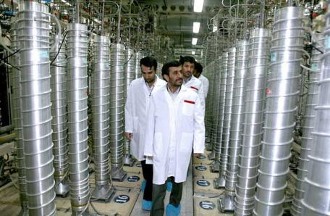
Reports are coming in from a number of officials familiar with the upcoming IAEA report on Iran’s civilian uranium enrichment, saying that Iran’s advanced centrifuges are not working nearly as well as predicted, and the nation is continuing to rely on its older, less efficient ones.

One former IAEA inspector, Olli Heinonen, said it wasn’t clear from what he’d seen if the problem was a lack of raw material or simply trouble with perfecting the design of the new centrifuges.

Iran has regularly announced new, even more advanced centrifuges, but diplomats say that the designs are actually attempts to fix flaws within a previous design. Western experts had been saying that for quite some time, and the IAEA report is simply expected to confirm this.

It is particularly important, however, because it comes at a time when the fact that Iran isn’t developing nuclear weapons is being shouted down with wild speculation about Iran’s supposedly rapidly advancing capabilities. The claims of Iran’s technological advancement being used to push for a military attack, besides being an extremely poor reason for a war, also appear to be suffering from the handicap of being untrue.

Feb 27, 2012

Iran is NOT developing nuclear weapons.

.
.
.
.

We all like gossip. But in matters relating to war and geo-strategy, FACTS are better things to rely on then over-hyped gossip. This is the civilized logical path.

The mullahs were brought into power by the USA/UK in 1979, to turn back the development clock in the country.

The mullahs are Luddites who have shooed away 5,000,000 middle class technocrats from the country into virtual exile.

Technocrats who could have been used to make smart things in the country.....but the mullahs aren't interested.

If mullah Iran does sometimes achieve progress in technology, fleetingly once in a blue moon, its because of imports from China and Russia, and not because of its own achievements and inherent technical abilities.....it doesn't have any. It does not seem to want it in an holistic sense, despite the regular announcements of technical break through in this and that in their media.


The new enhanced with greater horse power Talitank (TT)

____________________

New York Times: US Intelligence Says Iran Not Developing Nukes

The mainstream media is beginning to report the actual assessments of Iran's nuclear program, instead of the usual fear-mongering

by John Glaser at antiwar.com

The intelligence community in the United States believe there is no hard evidence that Iran has decided to build a nuclear bomb, the New York Times finally reported on Saturday.


The New York Times ran a front page article on Saturday reiterating the consensus view of the U.S. military and intelligence community regarding Iran’s nuclear program, splitting from usual mainstream media coverage which has hyped fear that Iran is on the verge of having nuclear weapons.

The U.S. assessments that Iran is not developing nuclear weapons and has demonstrated no intention of doing so has been reported here at Antiwar.com and many other alternative news sources, but only now, after successive pronouncements by high level officials going against the grain of the hawkish rhetoric on an impending Iranian bomb has the Times given the issue substantial space.

“Recent assessments by American spy agencies are broadly consistent with a 2007 intelligence finding that concluded that Iran had abandoned its nuclear weapons program years earlier,” the report said. “The officials said that assessment was largely reaffirmed in a 2010 National Intelligence Estimate, and that it remains the consensus view of America’s 16 intelligence agencies.”

(There is no reason to believe Iran even initiated a nuke bomb program EVER, under the mullahs, let alone stop an alleged one in 2007)

The report points to testimony from James R. Clapper Jr., the director of national intelligence, David H. Petraeus, the C.I.A. director, Defense Secretary Leon E. Panetta and Gen. Martin E. Dempsey, the chairman of the Joint Chiefs of Staff, all in agreement that there is no military dimension to Iran’s nuclear program.

This reportedly contradicts Israeli assessments and lately those of the U.N.’s nuclear watchdog, the International Atomic Energy Agency, which stirred up controversy over Iran’s program, claiming they are “unable to provide credible assurance about the absence of undeclared nuclear materials and activities in Iran.”

(Amano of the IAEA is a politicized figure who has undermined the credibility of the organization he purports to represents, and its extensive see anything, go anywhere on the spot zero notice inspections in IRAN since 2003......running into 9 years of work. Whilst simultaneously ignoring Israels huge undeclared nuclear doomsday arsenal, and the potential of nuke bomb programs in Turkey and Saudi Arabia......granted that under the terms of the IAEA, the organization only investigates nation which have officially acquired nuclear technology for civilian use ......rather than go on extensive fishing expeditions against nations which may have covert nuke bombs programs....as in the case of South Africa, where the IAEA failed or North Korea. But this is the character of this Vienna based body set up by the USA in the 1950's, and extensively infiltrated and run by Western intelligence.

Should the IAEA continue to produce such ambiguous and dangerous reports which fuels the fire of Israeli war mongering, then the better option for Iran would be to gradually curtail its activities in Iran)

But “intelligence officials and outside analysts,” the Times reports, believe “Iran could be seeking to enhance its influence in the region by creating what some analysts call ‘strategic ambiguity.’ Rather than building a bomb now, Iran may want to increase its power by sowing doubt among other nations about its nuclear ambitions.”

(Conjecture and highly speculative......aliens may have landed from Mars....Jews genetically may be more devious and conspiratorial then the rest of us......the Rothschilds may have started WWI to create the state of Israel.....Hitler was a International Jew banker puppet.....out to kill as many Occidentals as possible, and the destruction of the German nation.

What IS TRUE is that the Supreme Leader in Iran very publicly AT FRIDAY PRAYERS has stated unambiguously since 1989 MANY TIMES that Iran does not seek WMD's, or nuclear weapons. Given the nature of the regime thats a pretty good guarantee certificate and more reliable than an ambiguous IAEA report after 9 years of extensive work in Iran)

Iran is operating under constant threat from the U.S. and Israel. The U.S. has Iran militarily surrounded, has conducted covert attacks along with Israel, constantly threatens Iran with preemptive military strike, etc. In this environment, Iran has tried to abstain from developing nuclear weapons while having the know-how needed to get there; this essentially is an attempt to have a deterrent without actually having a deterrent.

(John how do you know? Do you have information about the mullah psyche and its detailed intentions better than US intelligence.)

As Mohamed ElBaradei, former head of the IAEA, said in 2009 “I don’t believe the Iranians have made a decision to go for a nuclear weapon, but they are absolutely determined to have the technology because they believe it brings you power, prestige and an insurance policy.”

Despite this consensus view in the U.S., Washington has continued to isolate Iran, to heap crippling economic sanctions on Iran to support Israel – and refuse to criticize it – even while Tel Aviv has supported terrorist operations against Iranian nuclear scientists. Amid intense pressure from various Western foreign policy elites to wage war on Iran, perhaps to install an obedient regime, the intelligence has removed the one possible pretext: an Iranian nuclear weapon. And even the mainstream news media is now reporting it.

Feb 18, 2012

Further clarification after "lock-step" faux pas.

.
.
.
.

Panetta: Iran is Not Developing Nuclear Weapons


Though Iran is enriching uranium, Panetta explained, they have not demonstrated any intention of building a bomb

by John Glaser, antiwar.com


Defense Secretary Leon Panetta said Thursday that Iran is enriching uranium in a peaceful nuclear program but that Tehran has not decided to develop an atomic bomb. (3 cheers for FACT based intelligence, and national security policy)


Top U.S. military and intelligence officials gave separate testimonies in congressional hearings on Thursday regarding Iran, and while they all reiterated the consensus that Iran’s nuclear program is purely civilian in nature, they also kept up the tough talk, hoping to satisfy hawks eager to preemptively strike Iran.

Panetta explained emphatically that any move from Iran to develop nuclear weapons is a “red line” for the U.S. ”We will not allow Iran to develop a nuclear weapon,” he said. “That is the red line that would concern us and that would ensure that the international community, hopefully together, would respond.”

(unambiguous clarification that is WELCOMED.........and that the USA intelligence Services will know if Iran has crossed that Red Line, or attempting to cross it. The USA must learn to rely on its own institutions rather than formulate State policy based on information from the little Sparta in the Med, or Murdoch's Fox News, or another ambiguous IAEA report)

“But the intelligence does not show that they’ve made the decision to proceed with developing a nuclear weapon,” Panetta added. This has been a bit of an inconvenient truth for Washington as they continue to heap crippling economic sanctions on Iran supposedly out of suspicion of their nuclear program. They’ve also continued to support Israel – and refuse to criticize it – even while Tel Aviv has supported terrorist operations against Iranian nuclear scientists.

(If Iran isn't trying to develop nuclear weapons then why the hostility? Whats the sum total of the build up of this media hostility, hype and greater stricter sanctions?)

Iran, on the defensive, has made announcements about new, domestically-made centrifuges that were installed at the main uranium enrichment site at Natanz, branding that and other such developments as some nuclear “milestone.” But U.S. State Department spokeswoman Victoria Nuland said Wednesday the announcement was “hyped” for a domestic audience.

(Mullah Iran has a track record of boasting about alleged technological achievements that don't exist going back to the 1980's....there are various domestic psychological reasons for this. The Mullahs came to power in 1979, as latter day Luddites at the behest of the USA/UK........shutting down the USA inspired Shah's ambitious nuclear program of $90 billion... as announced in 1974....which would be $360 billion at today's prices (2012). Though the mullahs have restarted the civilian nuclear program begun by the Shah, and attempted to complete nuclear power stations begun in the 1970's by the Shah .....there is no way the mullahs are going to invest the huge amounts of capital investment that the Shah promised. Maybe only 10% of what the Shah would have spent, in the next 10-20 years.

Why?

(i) The Mullahs are Luddites who aren't into technical modernization of the Iranian economy, which might produce a very large prosperous middle class. Instead the mullahs have been busy encouraging the technical class/middle class to leave Iran....up to 5,000,000 of them. The mullahs see the middle class as threats to their illegal UK/USA directed usurpation of power, and have thus allied themselves with the villagers and urban working class, at least through sloganism.(The symbol of which is the Jew Ahmedinejad....he does not wash, shave, or use after shave and wears very drab clothes)

(ii) The fear that Iran might run out of oil under the "Peak oil" theory from the USA, as conveyed to the Shah by 2000, the date of which has passed. Hence the urgency to build alternative power no longer exists.

(iii) For all the rhetoric, mullah Iran is a banana republic, with a mullah kleptocracy in power. Their collective snouts are in the petroleum trough, and that is all they are interested in, and to stay in power for as long as possible. Exempting the effects of sanctions, mullah Iran could be exporting as much as $150 billion this year...financial year ending march 31st, with imports at a mere, very stagnant....$60 billion, and weak economic growth...CLEARLY THE MULLAHS are siphoning off huge quantities of petro-$ for their own ends around the world, rather than spending on boosting the economy (greater expenditure on infrastructure and industry, which does not have inflationary side effects.)

The mullahs run an adhoc grossly mismanaged state, not unlike Bush II and Obama regimes/junta's. There is no real state planning, and everything depends on the whim and utterances of the "Supreme Fart" on any given day. There is no strategic planning of any kind for anything...whether defence, infrastructure, industry, education, petro-chemicals. Given the fundamental nature of such an "unique regime", does the mullah Kleptocracy want to embark on an extensive expensive nuclear bomb program which has to be vigorously hidden from prying eyes and the ever present IAEA?....I think not.

A nuke bomb program costs between $15--20 billion for a reasonable number of bombs. Then the extensive efforts to hide them underground.....so a couple of billion more, and the effective delivery systems...again at least $10 billion. Given that the mullahs spend only 3 % on defense, with such a weak conventional force as the next post suggests (so few combat aircraft in the airforce ...190...which could be used to deliver nuke bombs) STATED AGAIN...given the fundamental nature of the regime, and its repeated denial that it intends to have them....and the 8 year IAEA inspections....does it not suggests that the mullahs aren't going for nuke bombs?

Unwarranted baseless Israeli baiting/ranting against mullah Iran about alleged nuclear bomb programs is thus dangerous obviously, and tends to push against these three very fundamental facts stated above.

Should the little Sparta in the Med eventually paranoiacly "Cry Wolf" too often which pushes Iran in an UNITED NATIONAL EFFORT for the nuke bomb, then there after naturally Saudi Arabia would have to follow suit, as would Egypt, Turkey which may already have a surge program, Algeria and Indonesia.

Then the little Sparta in the Med will have truly "succeeded"

Nuclear weapons are evil Jew invented weapons.....the world does not need more countries, with more nuke bombs going for them due to the ill considered actions of the little Sparta in the Med....setting off a chain reaction.

Israel definitely has what is called the "Samson option"....which though sounds noble and strong, is based essentially on blind weak paranoia....centers on destroying the entire planet of 4.5 billion years....back into a red hot molten ball of fire.....So the Western elites secret construction of bunkers is going to come to naught. It would be inordinately more productive for those who have everything to loose..Rockeffer's et al to focus on Israel, and how to reasonably bring it under a secure leash, held by Washington......AND not the other way)

“Our view on this is that it’s not terribly new and it’s not terribly impressive,” she said.

Panetta also reiterated the oft-repeated euphemism for potential military attack against Iran, “we do keep all options on the table.” This helped lend legitimacy for political opportunists in the GOP to fear-monger about an imminent Iranian nuclear bomb, as House Speaker John Boehner did.

(What does the International Civilized Community have to say about making war threats against a significant nation, by an aggressive power whose key institutions have already indicated CLEARLY several times that Iran is not pursuing nuke bombs?........China, India, Russia, UNSC)

Feb 8, 2012

Ray McGovern's analysis of the Iran/Israel tensions

.
.
.
.

Obama’s Super-Bowl Fumble on Iran

by , at antiwar.com

Before President Barack Obama’s interview with NBC’s Matt Lauer, aired before the Super Bowl on Sunday, Israeli Prime Minister Benjamin Netanyahu probably hoped that, if Obama discussed Iran, he would give him the strong backing that Israeli leaders crave, freeing them to lash out at Iran — militarily, if they so choose.

Few could have been more keenly interested than he in what the president would say in an interview beamed to a hundred million American TV viewers. The problem was that Netanyahu could not have been completely sure of what to expect, given the confusing mixed signals coming out of Washington in the past several weeks.

Some of those signals had been disquieting to Netanyahu and other Israeli hard-liners — for example, Defense Secretary Leon Panetta saying flat out on Jan. 8 that Iran is NOT “trying to develop a nuclear weapon” — undercutting the key casus belli for war — and Joint Chiefs Chairman Martin Dempsey visiting Israel on Jan. 19, reportedly to repeat that in person and warn his hosts against provoking war with Iran.

In Netanyahu’s world, though, functionaries like Panetta and Dempsey are to be listened to politely but not taken all that seriously. It is what the American president says, in public, that may require more attention — and that is enhanced when he has the eyes and ears of multiple millions of super-prime-time viewers.

For Obama’s part, he was walking a political tightrope, having sent out two of his top national security aides to signal to Israel that he doesn’t want a new war in the Middle East, but not wanting to give his hawkish Republican rivals new reasons to question his support for Israel.

Obama is reportedly hopeful that a peaceful settlement can still be reached over Iran’s nuclear program, but he understands that he has little margin for error in this high-wire act of political diplomacy — especially with so many crosswinds in an election year.

So President Obama decided to forgo his best chance to inject a loud, unmistakable note of caution into recent warmongering over Iran, not only in Israel but also among influential neocons in the United States who have been jumping up and down, demanding another preemptive war over hypothetical WMDs, much as they did with Iraq.

When the interview was over, Netanyahu could breathe a sigh of relief. With Obama’s words and body language, there was nothing that would constitute a red light and some things that Netanyahu might interpret hopefully as nearly a green light.

Heightened Danger

Bottom line: The way the president chose to handle Lauer’s leading questions on Israel-Iran tensions has brought the world closer to hostilities that would deeply destabilize not only that region but the world economy.

Lauer: [Regarding] building tension between Israel and Iran: It seems now the Israelis are signaling they may act and conduct a strike inside Iran at their nuclear sites sooner than later. Do they have your full support for that raid?

Obama: I don’t think Israel has made a decision on what they need to do. I think they, like us, believe that Iran has to stand down on its nuclear weapons program, and we have mobilized the international community in a way that is unprecedented. And they [the Iranians] are feeling the pinch, they are feeling the pressure.

But they have not taken the steps they need to take diplomatically; which is [for the Iranians] to say, “We will pursue peaceful nuclear power; we will not pursue a nuclear weapon.” Until they do so, I think Israel, rightly, is going to be very concerned, and we are as well.

Lauer: Has Israel promised you that they would give you advance warning to any such attack? Should they give you that warning?

Obama: I won’t go into the details. I will say that we have closer military and intelligence consultation between our two countries than we’ve ever had. And we are going to make sure we work in lockstep, as we proceed to try to solve this — hopefully diplomatically.…

Our preferred solution here is diplomatic; we’re going to keep on pushing on that front. But we’re not going to take any options off the table, and I’ve been very clear that we’re going to do everything we can to prevent Iran from getting a nuclear weapon and creating an arms race, a nuclear arms race in a volatile region.

Delicate Positioning

Though the various elements of Obama’s delicate positioning are there — such as his desire for a diplomatic solution to the crisis and his hope to avoid another war — there were also problematic references that reinforced the case for a preemptive Israeli strike, such as the president’s bizarre assertion that Iran must declare that its nuclear program is for peaceful purposes only — when that is exactly what Iran has been saying for years.

So did Obama fumble or intentionally drop the ball? I think the latter, but it hardly matters. The consequences are pretty much the same either way.

The Israelis could not have been sure that Obama would decide to regurgitate their prevarication about Tehran’s notional nukes and contradict what his own defense secretary had said just four weeks ago, but that is what the president did.

What probably exceeded the Israeli leadership’s fondest expectations, though, was Obama’s pledge that in addressing Iran’s alleged nuclear ambitions, the U.S. will “work in lockstep” with Israel.

(“Lockstep?” What does Webster’s say of “lockstep?”

noun:

1 — a mode of marching in step by a body of men going one after another as closely as possible;

2 — a standard method or procedure that is mindlessly adhered to …

adjective:

— in perfect, rigid, often mindless conformity or unison.)

Obama poured icing on Israel’s cake when he emphasized that Israeli-U.S. military and intelligence consultation has never been closer. The result? Up in smoke went any possibility of plausible denial of foreknowledge on Washington’s part, if — despite Panetta’s oft-repeated pleas that Israel and the U.S. must “work together” — Israel follows its customary practice of shunning any advance warning (much less requests for permission) in favor of seeking post-hoc forgiveness for launching armed attacks.

Carte Blanche for Israel?

For those of us who thought that the White House, recognizing the stakes involved and the benefit of keeping some space between Washington and Tel Aviv, had been trying to restrain the Israelis from attacking Iran, it is hard to fathom why Obama took the line he did.

His words were less surprising to those who have long since concluded that in the coming months he will choose to act out of a felt need to be at least in as much in “lockstep” with Israel as any Republican contender — never mind the risk of giving Netanyahu the impression that there are few if any restraints on what Israel might do to Iran.

It’s also possible that Obama has concluded that there isn’t much he can do to restrain Netanyahu who has strong reason to believe that whatever the president of the United States may want doesn’t really matter when the Congress and much of the Fawning Corporate Media are already in lockstep behind whatever Israel does.

Think back on when Netanyahu gave Obama a public tongue-lashing in the Oval Office and then went to Capitol Hill to receive a hero’s welcome from Republicans and Democrats who engaged in a bipartisan competition to see who could jump to their feet the fastest and applaud the loudest.

Whatever school of thought you may favor regarding Obama’s Iran “strategy,” let me suggest that you put yourself in Netanyahu’s shoes as he watches the pre-game interview. Do you agree that he is likely to come away with the idea that Obama has just applied a fresh coat of high-gloss paint to the box into which the Israelis and their supporters believe they have painted him?

Four months ago, I wrote an article titled “Israel’s Window to Bomb Iran,” as the war-drumming on Iran began its crescendo. What has happened since has reinforced my assessment:

The key factor in any Israeli decision to send its aircraft and missiles to Iran is the degree to which Netanyahu and other hard-line Likud leaders believe that President Obama is locked into giving blanket support to Israel — particularly as Election 2012 draws near.

The Israelis might well conclude that the formidable effectiveness of the Likud Lobby and knee-jerk support of the U.S. Congress as well as still powerful neoconservatives in the Executive Branch (and on the opinion pages of major American newspapers) amount to solid assurance of automatic support for pretty much anything Israel decides to do.

If Israel translates this into a green light to attack Iran, the rest of the world — even Washington — may get little or no warning.

We need to add two important new factors since then:

1. Somehow the main focus has shifted from (a) how soon Iran could get a nuclear weapon to (b) how soon Israel is likely to attack Iran’s nuclear facilities — whether they are shown to be related to nuclear weapons development, or not.

2. The evolving discourse in the Fawning Corporate Media (FCM) has accustomed many Americans to assume that the Israelis would be within their rights to start a war on a convenient “if” — i.e., if the Iranians are working on a nuclear weapon. Never mind that Defense Secretary Panetta stated publicly just four weeks ago that they are NOT.

Of course, Panetta was simply reiterating the consensus conclusion of the 16 U.S. intelligence agencies that declared in 2007 that Iran had halted work on a nuclear weapon in 2003 and that it did not appear that such work had resumed. And even if you don’t want to believe the U.S. intelligence community and Panetta, there was the recent acknowledgement by Israeli Defense Minister Ehud Barak that the Mossad apparently has concluded the same thing.

Barak gave the interview on Jan. 18, the day before JCS Chairman Martin Dempsey arrived for talks in Israel:

Question: Is it Israel’s judgment that Iran has not yet decided to turn its nuclear potential into weapons of mass destruction?

Barak: [C]onfusion stems from the fact that people ask whether Iran is determined to break out from the control [inspection] regime right now … in an attempt to obtain nuclear weapons or an operable installation as quickly as possible. Apparently that is not the case.…

Question: How long will it take from the moment Iran decides to turn it into effective weapons until it has nuclear warheads?

Barak: I don’t know; one has to estimate.… Some say a year, others say 18 months. It doesn’t really matter. To do that, Iran would have to announce it is leaving the [UN International Atomic Energy Agency] inspection regime and stop responding to IAEA’s criticism, etc.

Why haven’t they [the Iranians] done that? Because they realize that … when it became clear to everyone that Iran was trying to acquire nuclear weapons, this would constitute definite proof that time is actually running out. This could generate either harsher sanctions or other action against them. They do not want that.

(For more details, see ConsortiumNews.com’s “U.S./Israel: Iran NOT Building Nukes.”)

Yet, in the United States, the FCM’s constant repetition that Iran is working on a nuclear weapon — despite the intelligence consensus that Iran is NOT doing so — has created widespread acceptance for an Israeli preemptive war. In many circles, the idea is almost greeted with a yawn, with another yawn given to the notion that “of course” the U.S. would have to march “in lockstep” with Israel, if it got into a war.

A few days ago, I was given eight full TV minutes on Russia Today to discuss whether it is a good idea to start wars in the subjunctive mood and what I believe are Israel’s true aims vis-à-vis Iran. In my view, the principal aim, pure and simple, is regime change in Tehran, not the destruction of Iran’s notional nukes.

Remember, there have been U.N. inspectors crawling all over Iran, which has yet to be shown to be in violation of the basic Nuclear Non-Proliferation Treaty, which Iran has signed and Israel has not. (Another relevant fact that is typically left out of FCM articles about the theoretical possibility of Iran building one nuke is that Israel has a sophisticated — and undeclared — arsenal of some 300 nukes.)

Is it conceivable that this kind of information has been kept from President Obama?

Originally published at ConsortiumNews.com.


Jan 26, 2012

.
.
.
.

US, Israel Agree: Iran Not Building Nukes

by at antiwar.com

Has Iran decided to build a nuclear bomb? That would seem to be the central question in the current bellicose debate over whether the world should simply cripple Iran’s economy and inflict severe pain on its civilian population or launch a preemptive war to destroy its nuclear capability while possibly achieving “regime change.”

And if you’ve been reading The New York Times or following the rest of the Fawning Corporate Media, you’d likely assume that everyone who matters agrees that the answer to the question is yes, although the FCM adds the caveat that Iran insists its nuclear program is for peaceful purposes only. The line is included with an almost perceptible wink and an “oh, yeah.”

However, a consensus seems to be emerging among the intelligence and military agencies of the United States — and Israel — that Iran has NOT made a decision to build a nuclear weapon. In recent days, that judgment has been expressed by high-profile figures in the defense establishments of the two countries — U.S. Defense Secretary Leon Panetta and Israel’s Defense Minister Ehud Barak.

You might think that you would have heard more about that, wouldn’t you? The United States and Israel agree that Iran is NOT building a nuclear bomb. However, this joint assessment that Iran has NOT decided to build a nuclear bomb apparently represented too big a change in the accepted narrative for the Times and the rest of the FCM to process.

Yet, on Jan. 18, the day before U.S. Joint Chiefs Chairman Gen. Martin Dempsey arrived for talks in Israel, Israeli Defense Minister Barak gave an interview to Israeli army radio in which he addressed with striking candor how he assesses Iran’s nuclear program. It was not the normal pabulum.

Question: Is it Israel’s judgment that Iran has not yet decided to turn its nuclear potential into weapons of mass destruction?

Barak: … [C]onfusion stems from the fact that people ask whether Iran is determined to break out from the control [inspection] regime right now … in an attempt to obtain nuclear weapons or an operable installation as quickly as possible. Apparently that is not the case.…

Question: How long will it take from the moment Iran decides to turn it into effective weapons until it has nuclear warheads?

Barak: I don’t know; one has to estimate.… Some say a year, others say 18 months. It doesn’t really matter. To do that, Iran would have to announce it is leaving the [UN International Atomic Energy Agency] inspection regime and stop responding to IAEA’s criticism, etc.

Why haven’t they [the Iranians] done that? Because they realize that … when it became clear to everyone that Iran was trying to acquire nuclear weapons, this would constitute definite proof that time is actually running out. This could generate either harsher sanctions or other action against them. They do not want that.

Question: Has the United States asked or demanded that the government inform the Americans in advance, should it decide on military action?

Barak: I don’t want to get into that. We have not made a decision to opt for that, we have not decided on a decision-making date. The whole thing is very far off.…

Question: You said the whole thing is “very far off.” Do you mean weeks, months, years?

Barak: I wouldn’t want to provide any estimates. It’s certainly not urgent. I don’t want to relate to it as though tomorrow it will happen.

As noted in my Jan. 19 article, “Israel Tamps Down Iran War Threats,” which was based mostly on reports from the Israeli press before I had access to the complete transcript of the interview, I noted that Barak appeared to be identifying himself with the consistent assessment of U.S. intelligence community since late 2007 that Iran has not made a decision to go forward with a nuclear bomb.

A Momentous NIE

A formal National Intelligence Estimate of November 2007 — a consensus of all 16 U.S. intelligence agencies — contradicted the encrusted conventional wisdom that “of course” Iran’s nuclear development program must be aimed at producing nuclear weapons. The NIE stated: “We judge with high confidence that in fall 2003, Tehran halted its nuclear weapons program; … Tehran’s decision to halt its nuclear weapons program suggests it is less determined to develop nuclear weapons than we have been judging since 2005.”

The Key Judgments of that Estimate elicited a vituperative reaction from some Israeli officials and in neoconservative circles in the United States. It also angered then-President George W. Bush, who joined the Israelis in expressing disagreement with the judgments. In January 2008, Bush flew to Israel to commiserate with Israeli officials who he said should have been “furious with the United States over the NIE.”

While Bush’s memoir, Decision Points, is replete with bizarre candor, nothing beats his admission that “the NIE tied my hands on the military side,” preventing him from ordering a preemptive war against Iran, an action favored by hawkish Vice President Dick Cheney.

For me personally it was heartening to discover that my former colleagues in the CIA’s analytical division had restored the old ethos of telling difficult truths to power, after the disgraceful years under CIA leaders like George Tenet and John McLaughlin when the CIA followed the politically safer route of telling the powerful what they wanted to hear.

It had been three decades since I chaired a couple of National Intelligence Estimates, but fate never gave me the chance to manage one that played such a key role in preventing an unnecessary and disastrous war as the November 2007 NIE did.

In such pressure-cooker situations, the Estimates job is not for the malleable or the fainthearted. The ethos was to speak with courage, and without fear or favor, but that is often easier said than done. In my days, however, we analysts enjoyed career protection for telling it like we saw it. It was an incredible boost to morale to see that happening again in 2007.

Ever since the NIE was published, however, powerful politicians and media pundits have sought to chip away at its conclusions, suggesting that the analysts were hopelessly naive or politically motivated or vengeful, out to punish Bush and Cheney for the heavy-handed tactics used to push false and dubious claims about Iraq’s WMDs in 2002 and 2003.

A New Conventional Wisdom

There emerged in official Washington a new conventional wisdom that the NIE was erroneous and wasn’t worth mentioning anymore. Though the Obama administration has stood by it, The New York Times and other FCM outlets routinely would state that the United States and Israel agreed that Iran was developing a nuclear bomb and then add the wink-wink denial by Iran.

However, on Jan. 8, Defense Secretary Panetta told Bob Schieffer on Face the Nation that “the responsible thing to do right now is to keep putting diplomatic and economic pressure on them [the Iranians] … and to make sure that they do not make the decision to proceed with the development of a nuclear weapon.”

Panetta was making the implicit point that the Iranians had not made that decision, but just in case someone might miss his meaning, Panetta posed the direct question to himself: “Are they [the Iranians] trying to develop a nuclear weapon? No.”

Barak’s Jan. 18 statement to Israeli army radio indicated that his views dovetail with those of Panetta — and their comments apparently are backed up by the assessments of each nation’s intelligence analysts. In its report on Defense Minister Barak’s remarks, the Israeli newspaper Haaretz on Jan. 19 summed up the change in the position of Israeli leaders as follows: “The intelligence assessment Israeli officials will present … to Dempsey indicates that Iran has not yet decided whether to make a nuclear bomb. The Israeli view is that while Iran continues to improve its nuclear capabilities, it has not yet decided whether to translate these capabilities into a nuclear weapon — or, more specifically, a nuclear warhead mounted atop a missile. Nor is it clear when Iran might make such a decision.”

At The New York Times, the initial coverage of Barak’s interview focused on another element. An article by Isabel Kershner and Rick Gladstone appeared on Jan. 19 on page A5 under the headline “Decision on Whether to Attack Iran is ‘Far Off,’ Israeli Defense Minister Says.”

To their credit, the Times’ Kershner and Gladstone did not shrink from offering an accurate translation of what Barak said on the key point of IAEA inspections: “The Iranians have not ended the oversight exercised by the International Atomic Energy Agency.… They have not done that because they know that that would constitute proof of the military nature of their nuclear program and that would provoke stronger international sanctions or other types of action against their country.”

But missing from the Times article was Barak’s more direct assessment that Iran apparently had not made a decision to press ahead toward construction of a nuclear bomb. That would have undercut the boilerplate in almost every Times story saying that U.S. and Israeli officials believe Iran is working on a nuclear bomb.

But That’s Not the Right Line!

So, what to do? Not surprisingly, the next day (Jan. 20), the Times ran an article by its Middle East bureau chief Ethan Bronner in which he stated categorically: “Israel and the United States both say that Iran is pursuing the building of nuclear weapons — an assertion denied by Iran — ….”

By Jan. 21, the Times had time to prepare an entire page (A8) of articles setting the record “straight,” so to speak, on Iran’s nuclear capabilities and intentions: Here are the most telling excerpts, by article (emphasis mine):

1. “European Union Moves Closer to Imposing Tough Sanctions on Iran,” by Steven Erlanger, Paris:

“Senior French officials are concerned that these measures [sanctions] … will not be strong enough to push the Iranian government into serious, substantive negotiations on its nuclear program which the West says is aimed at producing weapons.

“In his annual speech on French diplomacy on Friday, President Nicolas Sarkozy accused Iran of lying, and he denounced what he called its ‘senseless race for a nuclear bomb.’”

“Iran says it is enriching uranium solely for peaceful uses and denies a military intent. But few in the West believe Tehran, which has not cooperated fully with inspectors of the International Atomic Energy Agency and has been pursuing some technologies that have only a military use.”

(Pardon me, please. I’m having a bad flashback. Anyone remember the Times’ peerless reporting on those infamous “aluminum tubes” that supposedly were destined for nuclear centrifuges — until some folks did a Google search and found they were for the artillery then used by Iraq?)

2. “China Leader Warns Iran Not to Make Nuclear Arms,” by Michael Wines, Beijing:

“Prime Minister Wen Jiabao wrapped up a six-day Middle East tour this week with stronger-than-usual criticism of Iran’s defiance on its nuclear program….”

“Mr. Wen’s comments on Iran were unusually pointed for Chinese diplomacy. In Doha, Qatar’s capital, he said China ‘adamantly opposes Iran developing and possessing nuclear weapons.’”

“Western nations suspect that Iran is working toward building a nuclear weapon, while Iran insists its program is peaceful.”

3. “U.S. General Urges Closer Ties With Israel,” by Isabel Kershner, Jerusalem:

“Though Iran continues to insist that its nuclear program is only for civilian purposes, Israel, the United Stated, and much of the West are convinced that Iran is working to develop a weapons program.…”

Never (Let Up) on Sunday

Next it was time for the Times to trot out David Sanger from the Washington bullpen. Many will remember him as one of the Times’ stenographers/cheerleaders for the Bush/Cheney attack on Iraq in March 2003. An effusive hawk also on Iran, Sanger was promoted to a position as chief Washington correspondent, apparently for services rendered.

In his Jan. 22 article, “Confronting Iran in a Year of Elections,” Sanger pulls out all the stops, even resurrecting Condoleezza Rice’s “mushroom cloud” to scare all of us — and, not least, the Iranians:

“From the perception of the Iranians, life may look better on the other side of the mushroom cloud,” said Ray Takeyh, a senior fellow at the Council on Foreign Relations. He may be right: while the Obama administration has vowed that it will never tolerate Iran as a nuclear weapons state, a few officials admit that they may have to settle for a “nuclear capable’” Iran that has the technology, the nuclear fuel and the expertise to become a nuclear power in a matter of weeks or months.

Were that not enough, enter the national champion of the Times cheerleading squad that prepared the American people in 2002 and early 2003 for the attack on Iraq, former executive editor Bill Keller. He graced us the next day (Jan. 23) with an op-ed entitled “Bomb-Bomb-Bomb, Bomb-Bomb-Iran?” — though he wasn’t favoring a military strike, at least not right now. Here’s Keller:

The actual state of the [nuclear] program is not entirely clear, but the best open-source estimates are that if Ayatollah Ali Khamenei ordered full-speed-ahead — which there is no sign he has done — they could have an actual weapon in a year or so.… In practice, Obama’s policy promises to be tougher than Bush’s. Because Obama started out with an offer of direct talks — which the Iranians foolishly spurned — world opinion has shifted in our direction.

Wow. With Iraqi egg still all over his face, the disgraced Keller gets to “spurn” history itself — to rewrite the facts. Sorry, Bill, it was not Iran, but rather Secretary of State Hillary Clinton and other neocons in the U.S. Department of State and White House (with you and neocon allies in the press cheering them on), who “foolishly spurned” an offer by Iran in 2010 to trade about half its low-enriched uranium for medical isotopes. It was a deal negotiated by Turkey and Brazil, but it was viewed by the neocons as an obstacle to ratcheting up the sanctions.

In his Jan. 23 column, with more sophomoric glibness, Keller wrote this:

We may now have sufficient global support to enact the one measure that would be genuinely crippling — a boycott of Iranian oil. The Iranians take this threat to their economic livelihood seriously enough that people who follow the subject no longer minimize the chance of a naval confrontation in the Strait of Hormuz. It’s not impossible that we will get war with Iran even without bombing its nuclear facilities.

How neat! War without even trying!

The Paper of (Checkered) Record

Guidance to all NYT hands: Are you getting the picture? After all, what does Defense Minister Barak know? Or Defense Secretary Panetta? Or the 16 agencies of the U.S. intelligence community? Or apparently even Israeli intelligence?

The marching orders from the Times’ management appear to be that you should pay no heed to those sources of information. Just repeat the mantra: Everyone knows Iran is hard at work on the Bomb.

As is well-known, other newspapers and media outlets take their cue from the Times. Small wonder, then, that USA Today seemed to be following the same guidance on Jan. 23, as can be seen in its major editorial on military action against Iran:

The U.S. and Iran will keep steaming toward confrontation, Iran intent on acquiring the bomb to establish itself as a regional power, and the U.S. intent on preventing it to protect allies and avoid a nuclear arms race in the world’s most volatile region.

One day, the U.S. is likely to face a wrenching choice: bomb Iran, with the nation fully united and prepared for the consequences, or let Iran have the weapons, along with a Cold War-like doctrine ensuring Iran’s nuclear annihilation if it ever uses them. In that context, sanctions remain the last best hope for a satisfactory solution.

And, of course, the U.S. press corps almost never adds the context that Israel already possesses an undeclared arsenal of hundreds of nuclear weapons, or that Iran is essentially surrounded by nuclear weapons states, including India, Pakistan, Russia, China, and — at sea — the United States.

PBS Equally Guilty

PBS’s behavior adhered to its customary don’t-offend-the-politicians-who-might-otherwise-cut-our-budget attitude on the Jan. 18 NewsHour — about 12 hours after Ehud Barak’s interview started making the rounds. Host Margaret Warner set the stage for an interview with neocon Dennis Ross and Vali Nasr (a professor at Tufts) by using a thoroughly misleading clip from former Sen. Rick Santorum’s Jan. 1 appearance on Meet the Press.

Warner started by saying: “Back in the U.S. many Republican presidential candidates have been vowing they’d be even tougher with Tehran. Former Senator Rick Santorum spoke on NBC’s Meet the Press: ‘I would be saying to the Iranians, you open up those facilities, you begin to dismantle them and make them available to inspectors, or we will degrade those facilities through air strikes and make it very public that we are doing so.’”

Santorum seemed totally unaware that there are U.N. inspectors in Iran, and host David Gregory did nothing to correct him, leaving Santorum’s remark unchallenged. The blogosphere immediately lit up with requests for NBC to tell their viewers that there are already U.N. inspectors in Iran, which unlike Israel is a signatory to the Nuclear Non-Proliferation Treaty and allows IAEA inspections.

During the Warner interview, Dennis Ross performed true to form, projecting supreme confidence that he knows more about Iran’s nuclear program than the Israeli Defense Minister and the U.S. intelligence community combined:

Margaret Warner: If you hamstring their [Iran’s] Central Bank, and the U.S. persuades all these other big customers not to buy Iranian oil, that could be thought of as an act of war on the part of the Iranians. Is that a danger?

Ross: I think there’s a context here. The context is that the Iranians continue to pursue a nuclear program. And unmistakably to many, that is a nuclear program whose purpose is to achieve nuclear weapons. That has a very high danger, a very high consequence. So the idea that they could continue with that and not realize that at some point they have to make a choice, and if they don’t make the choice, the price they’re going to pay is a very high one, that’s the logic of increasing the pressure.

Never mind that the Israeli defense minister had told the press something quite different some 12 hours before.

Still, it is interesting that Barak’s comments on how Israeli intelligence views Iran’s nuclear program now mesh so closely with the NIE in 2007. This is the new and significant story here, as I believe any objective journalist would agree.

However, the FCM — led by The New York Times — cannot countenance admitting that they have been hyping the threat from Iran as they did with Iraq’s nonexistent WMDs just nine years ago. So they keep repeating the line that Israel and the U.S. agree that Iran is building a nuclear weapon.

In this up-is-down world, America’s newspaper of record won’t even report accurately what Israel (or the CIA) thinks on this important issue, if that goes against the alarmist conventional wisdom that the neocons favor. Thus, we have this divergence between what the U.S. media is reporting as flat fact — i.e., that Israel and the United States believe Iran is building a bomb (though Iran denies it) — and the statements from senior Israeli and U.S. officials that Iran has NOT decided to build a bomb.

While this might strike some as splitting hairs — since peaceful nuclear expertise can have potential military use — this hair is a very important one. If Iran is not working on building a nuclear bomb, then the threats of preemptive war are not only unjustified, they could be exactly the motivation for Iran to decide that it does need a nuclear bomb to protect itself and its people.

Originally published by ConsortiumNews.com.